Showing posts with label branding tips. Show all posts

Monday, January 26, 2015

REPOST: Where your brand is going wrong with social media

Social media can make or break a brand. Rosie Spaughton of The Guardian believes that the foundation of a business’ successful social media presence are cordiality, going easy on the business-speak, and spending time interacting and laughing with followers. More of her insights below:

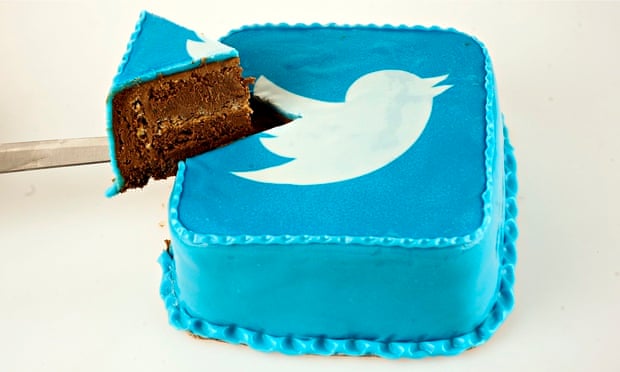
Image Source: theguardian.com
Piece of cake… follow these tips to master how your brand engages fans and followers on social media.

Working for a digital agency, I know how much money clients will spend on the important things such as branding and websites, but they fail to recognise the importance of social media: leaving social accounts dormant, letting just anyone control them and posting tired, self-promoting posts. Where is the relationship building, the fun, the passion? Just as your company needs a strategy for success, so does your social media presence. Here are some basics.


Word of web


It doesn’t matter how much money you spend on branding, marketing and advertising; it all comes down to how well your products are perceived. These days the internet makes these perceptions accessible to anyone who wants to listen. That’s why we use Google before we buy anything. To me, word of mouth – or should I say, word of tweet, status, Vine, video, Pinterest and Tumblr – are gospel.

A quick way to demonstrate how great your company is – and to fight off competitors in a web search – is to use a star rating through Google’s My Business. I will always pick a business or service that has a star rating next to it over one that hasn’t. These ratings, even an average one, show people that your customers are happy with the service they receive. But don’t panic about getting five out of five stars; a perfect rating can look suspicious and besides, seeing true ratings and testimonials can tell you areas that you need to improve on, so get some honest feedback. Plus, a star rating helps you to rank higher on Google search results pages.


Tone of tweet


Every company understands that the way you run your online accounts reflects your business. But people will be expecting more than a professional-sounding tweet. Companies that just tweet business updates via business-speak don’t let their personality shine through, which is a shame. They need to have a think about their values and how they can get this across. Are you a caring company? Then adopt a more soothing tone of voice.

Demonstrate who you are, not just what you do. Being slightly tongue-in-cheek gets you noticed. Have some banter with a celebrity and watch your retweets go mad. Even if you manage to get followers, subscribers and likes, you won’t retain them by being boring. Use a mix of media: tweet videos, infographics, Vines, gifs and links. Interesting content gets shared, commented on and liked.


Incentivise


By providing a relevant service, companies may immediately attract a fair amount of followers, but gaining followers isn’t everything; you need to retain them. People are picky about who they follow and need an incentive to interact with your brand. A good way to keep your followers happy is to play games and competitions with them, and reward them for getting involved. Helpful hints and tips are a great way to keep people checking your page. I’ll be honest here, I buy a lot of clothes, but I don’t follow every clothing store online – just the ones that post outfit ideas I adore. Give people a reason to check your posts.


Every social platform counts


Having plenty of followers on Facebook and Twitter is all well and good, but you shouldn’t stop there. Each social media platform has its own unique audience: for example, Generation Z – those born after the millennial generation (so those born around the early and mid 2000s) prefer quick blasts of communication, such as a six-second Vine. Millennials, meanwhile, will turn to Tumblr. As a brand, your aim is to reach everybody, so sticking to the same channels with the same limited audience is redundant. Research other methods on social that could boost your company. Time is money, so spend the time online.

Once you are on these channels, keep using them. If you stop posting, your followers and customers will assume you are missing in action and won’t actively follow you. If they have a problem and are ignored, they will become frustrated and are more likely to tweet angrily about the situation. Relationship ruined.


The most important bit


Make friends and spend time interacting, chatting and laughing with them. Retweet, favourite and compliment them. Remember that it’s not all about you. Traditionally, if a person liked a shopkeeper they would continue to shop, despite competition, because of the friendship. Build lasting, meaningful relationships with happy, satisfied clients.

By having conversations online – rather than spamming people with your latest offers – relationships are built that can create the foundation for a successful business, brand or campaign.

Spiro Baltas and his team at Gotham Brand help businesses create an individual identity and personality through effective branding strategies. Follow this Facebook page for more discussions on branding and networking.

Thursday, October 23, 2014

REPOST: Branded a fool

Names can make or break companies. The Economist article below talks about the unspoken rules in creating brand names that appeal and “stick” to public consciousness:  

Image Source: ecomist.com

SEVERAL years ago, Johnson lightly mocked a new reverse-auction website for legal services. The concept annoyed lawyers by asking them to bid down their fees to win a client's engagement. But it gave a good belly-laugh to language and branding experts with its—to be charitable—offbeat name. Shpoonkle, alas, is no longer in business.

Unhappy families, Tolstoy tells us, are all unhappy in different ways. But unhappy brand names commit a few of the same sins over and over. Alexandra Watkins, the founder of a branding agency called Eat My Words, distills seven deadly sins in an infectious little book called “Hello, My Name is Awesome...How to Create Brand Names that Stick”. She devotes an acronym, SCRATCH, to the mistakes that make potential customers scratch their heads. While slightly-too-cute acronyms are not Johnson’s thing, the advice is spot on: Spelling-challenged, Copycat, Restricted, Annoying, Tame, Curse of knowledge, Hard to pronounce. Though she avoids linguistic jargon, some of her rules touch on interesting deeper issues.

Take the first injunction, to avoid odd spellings. Speesees, a now-defunct baby clothing-maker, was a head-scratcher. One was meant to see it as a childish misspelling of “species”, but the namers didn’t bother thinking about how often a tiny child has occasion to write the word “species” (nor, as Ms Watkins points out, that it rhymes with “faeces”).  Any name that requires explanation makes a customer spend time learning and remembering the explanation (“You see, it’s how a four-year-old might spell ‘species’...”).  People avoid extra effort every chance they can; a name that is hard to spell or remember is harder to Google and buy from.

Other names are difficult to pronounce. How Saucony and Diageo have succeeded with names that can be pronounced several ways is a mystery to your columnist. Memorability again rears its head; if sound and spelling reinforce each other easily, the brain has less work to do, and cognitive ease makes people favourably inclined to companies. One study among Americans found that of fictitious Turkish brokerage houses, readers trusted identical research reports from the easily pronounceable Artan over the head-scratcher Taahhut.

Getting a brand to cross borders is not easy. But of all the problems that company-namers fear, one common one is surprisingly unlikely. Unless your brand is truly going to be found in every corner of the globe—not common for beginning entrepreneurs—you are unlikely offend speakers of a language you have never heard of.  The famous Chevy Nova flop in Latin America is a myth; though "no va" means “doesn’t go”, “Nova” is pronounced with a different stress than "no va", and Spanish-speakers did not make this association. Sweden really did have a toilet paper called Kräpp, but it was never on sale in Cardiff or Cleveland.

Pronounceability in a wide variety of languages may be more important. Reading recently about Rocket Internet, a German e-commerce company-builder, Johnson was struck by how the company seems to coin names that are boring but predictably pronounceable. A mostly consonant-vowel syllable structure makes Zalando, Lamoda, Lazada, Jumia, Dafiti and their like easy to say in a lot of languages. Some languages like English and German have lots of long consonant clusters; others like Japanese and Italian do not. Speakers of the latter have a hard time mastering the pronunciation of the former.  Some sounds (t, p and m for example) are found in many languages. Other sounds (the English j and th sounds, the German and Scottish ch, etc) don’t travel well. Finally, some letters (c, q, w, j and x) have very different sounds even in closely related European languages, and are best to avoid if you aim for global domination.

Finally, an evocative name sets off a chain of associations in the mind. Among small companies, a public-relations shop called Firetalker and a yogurt chain called Spoon Me are two of Ms Watkins’ darlings. The first aptly implies brassy confidence, and the second evokes not just food but cuddling. Among big brand names, Kryptonite bicycle locks (neutralises criminals’ powers) or Nissan’s Leaf electric car (a twist on the “green” cliché) are among her favourites. Combining two words cleverly (Groupon, Pinterest) into a portmanteau both pronounceable and evocative is a double win. And she advises clients not to be afraid of a longer name, if it is memorably perfect. Previously Owned By a Gay Man, a second-hand home-furnishings shop, beats the stuffing out of tech companies like Atmosphir, Tweegee and plaYce. As a bonus, a name made of short words unusually combined is likely to avoid trademark-infringement claims, and is likely to be available as an internet domain.

Rules are made to be broken, of course. "Google" is a cutesy misspelling of the mathematical term “googol”. "Apple” is pretty tame, one of Ms Watkins’s things to avoid. And Johnson learned from "Hello, My Name is Awesome" how to pronounce “Bulgari” for the first time, a fact that hasn’t stopped that company from selling jewellery at astronomical prices. The fact remains, though, that a bad name makes an entrepreneur’s job twice as hard—especially at the start. Most companies fail. But if Shpoonkle had spent just a bit more time on the obvious dos and don’ts of brand-naming, it might just have had a shot.

Spiro Baltas and his team at Gotham Brand work to create customized brand identities that positively affect their clients’ business. Learn how branding helps companies grow on this website.